
Water Resource Engineer
a guide to: Career
What is a Water Resource Engineer?
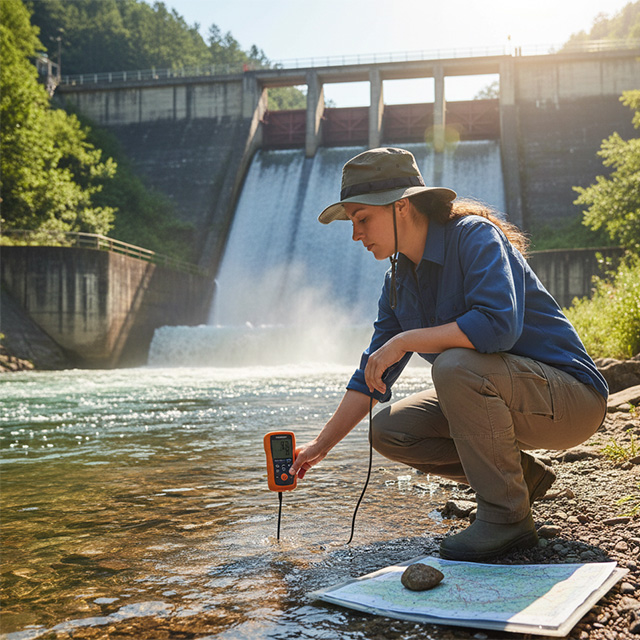
A Water Resource Engineer is a specialized civil engineer who designs and manages systems for water supply, wastewater treatment, and flood control. They use hydrological and hydraulic principles to ensure the sustainable distribution, quality, and conservation of water for communities and ecosystems.
Why is a Water Resource Engineer important?
Water Resource Engineers are essential for global survival as they manage our most precious resource. They mitigate the impacts of climate change, prevent waterborne diseases, and ensure agricultural food security through efficient irrigation.
- Sustainable Supply:
- Ensures long-term availability of clean drinking water for growing populations through efficient water treatment and distribution systems.
- Disaster Mitigation:
- Designs flood defenses, drainage systems, and stormwater management infrastructure to prevent loss of life and property during extreme weather events.
- Environmental Protection:
- Manages wastewater, industrial effluents, and runoff to protect rivers, oceans, and local biodiversity.
- Resource Optimization:
- Maximizes efficient use of water in energy production, agriculture, and urban planning, reducing waste and enhancing sustainability.
Ultimately, Water Resource Engineers are the guardians of the water cycle. By balancing human demand with ecological health, they build resilient infrastructure that secures a safe and hydrated future for the planet.
Education Pathways
Option 01
Stream

Important Subjects
| # | Subject |
|---|---|
| 1 | Hydrology – Study of rainfall, runoff, infiltration, and watershed behavior to manage water resources effectively. |
| 2 | Irrigation Engineering – Design of canals, dams, reservoirs, and irrigation systems for agricultural and urban water supply. |
| 3 | Hydraulics – Analysis of water flow in pipes, channels, and open waterways to optimize system performance. |
| 4 | Groundwater Engineering – Understanding aquifer properties, well design, and sustainable groundwater management. |
| 5 | Water Resources Planning – Allocation, optimization, and long-term management strategies for surface and groundwater resources. |
| 6 | Flood Control Engineering – Estimating floods, designing mitigation structures, and implementing river management solutions. |
| 7 | Environmental Engineering – Treatment of wastewater, pollution control, and maintaining water quality for human and ecosystem health. |
| 8 | GIS & Remote Sensing – Spatial analysis, mapping, and monitoring for water resource assessment, planning, and disaster management. |
| 9 | River Engineering – River training works, sediment transport studies, and erosion control for stable and navigable waterways. |
| 10 | Dam Engineering – Design, structural safety analysis, and maintenance of dams for storage, hydropower, and flood control. |
| 11 | Climate Change Studies – Evaluating impacts of climate variability on water availability and planning adaptive strategies. |
| 12 | Water Policy & Management – Legal, economic, and institutional frameworks governing water allocation, rights, and governance. |
Career Progression for a Water Resource Engineer
Qualification Levels:
- Degree for entry roles;
- Degree & Certification added advantage.
Role Levels & Growth:
- Entry Level: Graduate Water Engineer - Water Resource Engineer
- Mid-Level: Water Resource Engineer - Senior Engineer
- Senior Level: Senior Water Engineer Lead / Consultant
- Executive Level: Water Resource Manager - Program Director
Further Opportunities:
- Executive: Consultant/Dir.: High-level advisory for international bodies like the World Bank.
Sectors Offering
- Government Water Departments & PWD: Planning, operation, and maintenance of municipal and regional water supply, flood control, and irrigation infrastructure.
- Irrigation & Canal Authorities: Management of canals, reservoirs, and irrigation systems for agriculture and water distribution.
- Urban Water Supply & Sanitation Boards: Provision of safe drinking water, wastewater management, and sewerage systems in cities and towns.
- Hydropower Projects: Design, construction, and operation of dams, reservoirs, and turbines for sustainable electricity generation.
- Environmental & Engineering Consultancies: Specialized services in water resource management, flood mitigation, wastewater treatment, and environmental impact studies.
- NGOs & International Development Agencies: Implementing water access, sanitation, and resource management projects in communities and disaster-affected regions.
- Research & Academic Institutions: Research, innovation, and training in hydrology, hydraulics, climate adaptation, and sustainable water management.
Expected Salary
Entry Level
- ₹4.5 - ₹8.0 LPA
Mid-Level
- ₹12.0 - ₹20.0 LPA
Senior Level
- ₹25.0 - ₹50.0 LPA
International
Entry Level
- $65,000 - $85,000 per annum
Mid/Senior Level
- $95,000 - $190,000 per annum
Design by Find Right Path