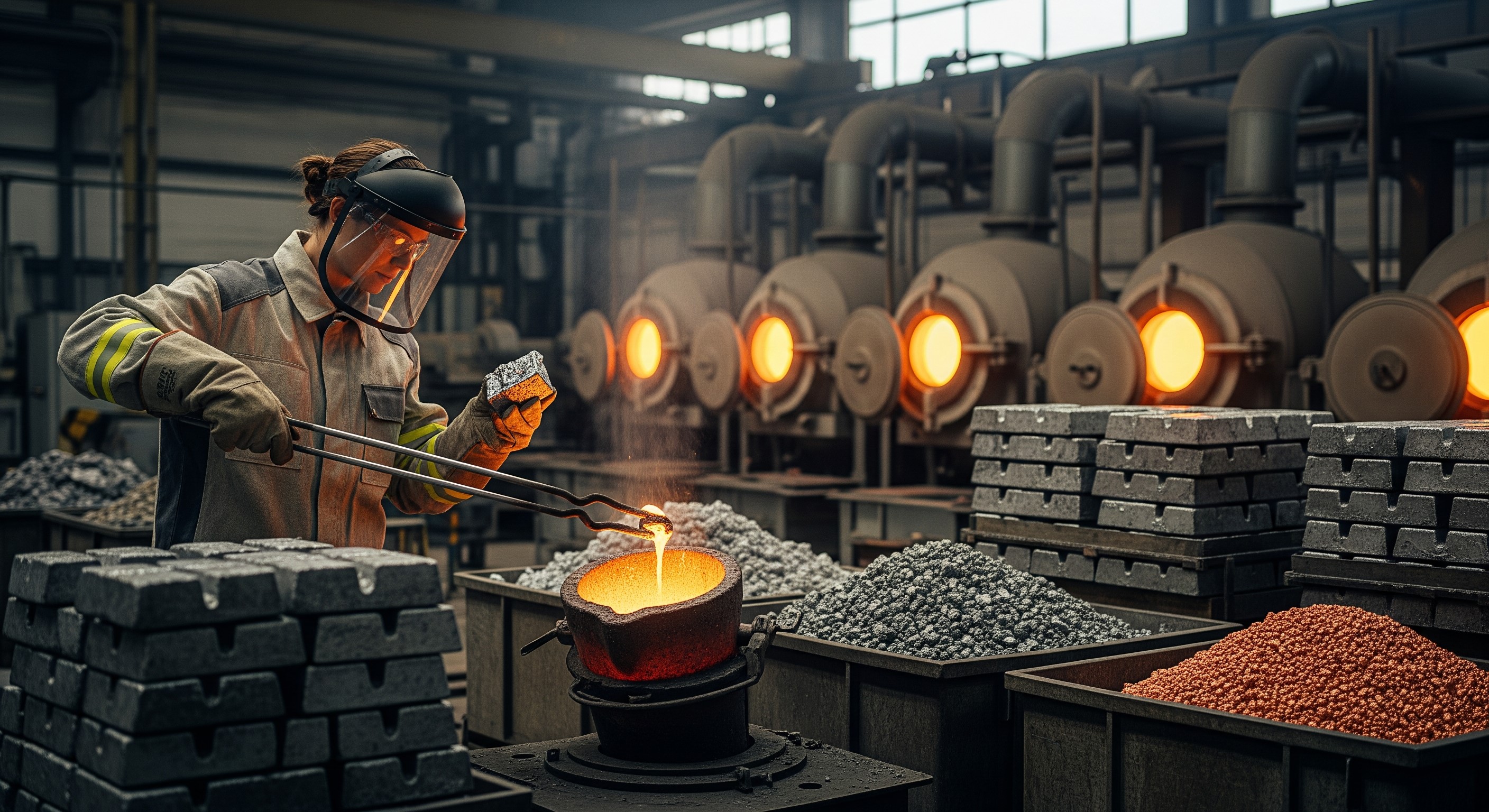
Metallurgy Engineer
a guide to: Career
What is a Metallurgy Engineer?
A Metallurgy Engineer is a professional who studies the physical and chemical behavior of metallic elements and alloys. They are responsible for extracting metals from ores, developing new alloys with specific properties, and optimizing manufacturing processes like casting, forging, and welding.
Why is a Metallurgy Engineer important?
Metallurgy engineers are essential because they develop the high-performance materials required for every major industry. By improving metal strength, reducing corrosion, and creating lightweight alloys, they enable safer transportation, more efficient energy systems, and advanced medical implants.
- Material Innovation:
- Creating advanced alloys such as titanium for aerospace applications and specialized steels for construction and industrial use.
- Resource Extraction:
- Developing efficient and sustainable methods to process and refine raw ores into usable, high-purity metals.
- Failure Analysis:
- Investigating the causes of metal component failures to prevent future industrial accidents and improve structural safety.
- Sustainability:
- Leading green metallurgy initiatives through metal recycling, waste reduction, and eco-friendly manufacturing processes.
Ultimately, metallurgy is the foundation of the industrial world. Without these engineers, the complex machinery, infrastructure, and electronic devices we rely on daily would lack the structural integrity and durability needed to function.

Education Pathways
Option 01
Stream

Important Subjects
| # | Subject |
|---|---|
| 1 | Extractive Metallurgy – Focuses on ore processing, metal extraction, and industrial refining techniques and processes. |
| 2 | Physical Metallurgy – Study of crystal structures, phase transformations, defects, and mechanical behavior of materials. |
| 3 | Thermodynamics of Materials – Application of energy principles to chemical reactions, phase equilibria, and material stability analysis. |
| 4 | Kinetics and Diffusion – Examination of diffusion mechanisms, reaction rates, and transformation behavior in solid materials. |
| 5 | Mechanical Metallurgy – Evaluation of strength, toughness, fatigue, creep, and deformation mechanisms in metals. |
| 6 | Corrosion Engineering – Study of corrosion mechanisms, prevention techniques, coatings, and material protection strategies. |
| 7 | Phase Diagrams – Interpretation of equilibrium phase diagrams for alloy design, processing decisions, and optimization. |
| 8 | Heat Treatment – Enhancement of material properties through controlled heating and cooling cycles. |
| 9 | Powder Metallurgy – Manufacturing of components using metal powders, compaction, and sintering techniques. |
| 10 | Casting and Solidification – Study of metal casting processes and principles of solidification structure control. |
| 11 | Materials Characterization – Analysis of microstructure using microscopy, spectroscopy, and mechanical testing techniques. |
| 12 | Welding and Joining – Study of joining processes, weld metallurgy, defects, and evaluation of joint performance. |
Career Progression for a Metallurgy Engineer
Qualification Levels:
- B.Tech/B.E./Diploma for entry roles;
- M.Tech/M.E. and certifications added advantage.
Role Levels & Growth:
- Entry Level: Junior Metallurgy Technician - Supervisor / Inspector
- Mid-Level: Graduate Metallurgy Engineer - Process / Quality Engineer
- Senior Level: Senior / Lead Engineer - Manager / R&D Engineer
- Executive Level: Scientist / Professor - Principal Scientist
Further Opportunities:
- Transitioning into Supply Chain Management, Technical Consulting, or high-end Material Science Research.
Sectors Offering
- Steel and Metal Manufacturing: Production, processing, and quality assurance of steel and non-ferrous metals used across industrial applications.
- Mining and Mineral Processing: Extraction, beneficiation, and processing of mineral resources to obtain usable ores and concentrates.
- Automotive and Aerospace: Development and application of high-performance materials, alloys, and lightweight structures for vehicles and aircraft.
- Power and Energy: Materials selection, failure analysis, and maintenance support for power generation systems including thermal, nuclear, and renewable plants.
- Oil and Gas: Design and evaluation of corrosion-resistant materials, pipelines, pressure vessels, and equipment for upstream and downstream operations.
- Defense and Ordnance: Metallurgical support for weapons systems, armored vehicles, ammunition, and high-strength defense components.
- Welding and Fabrication: Supervision and development of welding processes, fabrication techniques, joint quality, and structural integrity.
- Materials Research & R&D: Research and development of new materials, alloys, coatings, and manufacturing technologies.
- Quality Control and Inspection: Material testing, non-destructive evaluation, failure investigation, and compliance with industrial standards.
- Heavy Engineering Industries: Metallurgical design and support for large-scale machinery, equipment, pressure vessels, and industrial infrastructure.
Expected Salary
Entry Level
- ₹3.5 - ₹6.0 LPA
Mid-Level
- ₹6.0 - ₹10.0 LPA
Senior Level
- ₹18.0 - ₹28.0 LPA
International
Entry Level
- $60,000 - $75,000 per annum
Mid/Senior Level
- $85,000 - $170,000 per annum
Design by Find Right Path